
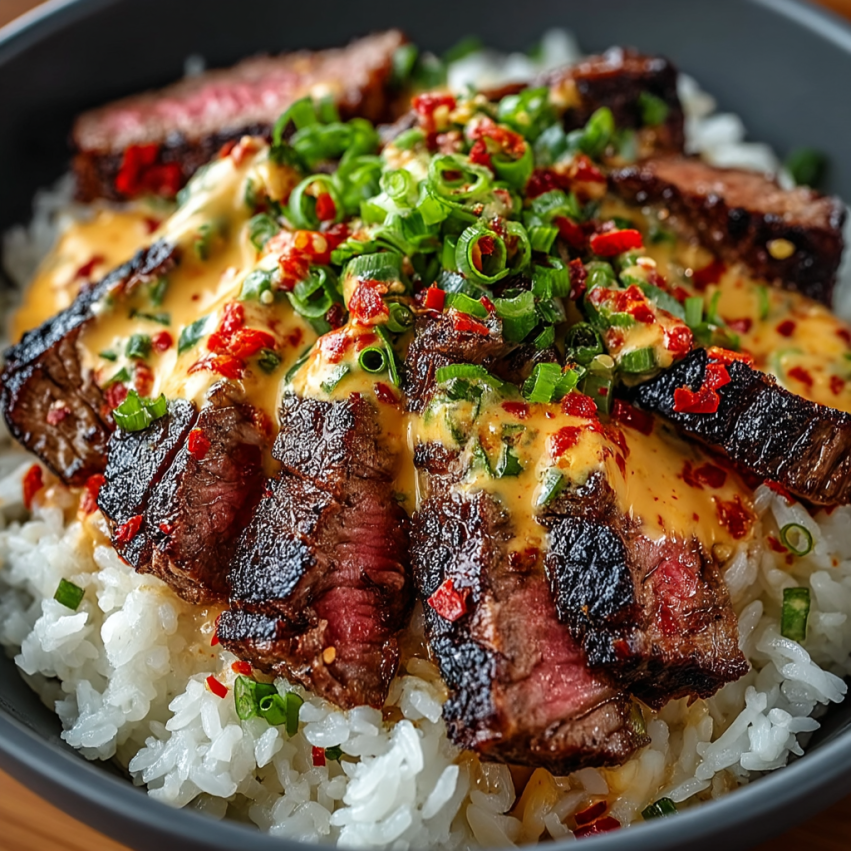
There’s something magical about the moment you drizzle that creamy, spicy sauce over perfectly caramelized Korean BBQ steak. I still remember the first time I tasted a Korean rice bowl at a tiny restaurant in my neighborhood—the combination of sweet, savory, and spicy flavors completely changed how I thought about weeknight dinners. Since then, I’ve been on a mission to recreate that restaurant-quality experience at home, and this recipe has become my absolute go-to when I’m craving something bold and satisfying.
What I love most about these bowls is how they trick everyone into thinking you spent hours in the kitchen. In reality, you’re looking at about 45 minutes from start to finish, including marinating time. The secret lies in the gochujang marinade, which does all the heavy lifting while you go about your evening. Meanwhile, the spicy cream sauce adds that irresistible finishing touch that makes these bowls feel special enough for guests yet simple enough for a Tuesday night.
Why You’ll Love This Korean BBQ Bowl Recipe
Bold flavors without the fuss. This recipe delivers restaurant-quality Korean BBQ flavor using ingredients you can find at most grocery stores. The gochujang paste brings authentic heat and depth, while the honey balances everything with a subtle sweetness that caramelizes beautifully when the steak hits the hot pan.
Incredibly versatile and customizable. Whether you prefer your steak medium-rare or well-done, this recipe adapts to your preferences. Additionally, you can swap the beef for chicken thighs, pork, or even tofu if you want a different protein. The spicy cream sauce works beautifully with any option you choose.
Perfect for meal prep enthusiasts. These bowls are a meal prepper’s dream. You can marinate the steak the night before, cook everything in batches, and have ready-to-go lunches for the entire week. The components store separately, so you can keep everything fresh and assemble your bowl when you’re ready to eat.
Kid-friendly with adult appeal. Here’s the beauty of this recipe: you control the heat level. For younger eaters, you can dial back the gochujang and sriracha while still delivering tons of flavor. Adults can always add extra sauce or a sprinkle of red pepper flakes to their individual bowls.
Ingredients You’ll Need
For the Steak Marinade
The marinade is where the magic happens. You’ll need 1 pound of beef steak—flank, skirt, or New York strip all work wonderfully, cut into 1-inch cubes for maximum surface area. Gochujang (Korean chili paste) serves as the flavor backbone, providing fermented depth and moderate heat. Soy sauce adds saltiness and umami, while honey brings sweetness and helps create that gorgeous caramelization.
Sesame oil contributes a nutty aroma that’s essential to Korean cuisine. For the dry seasonings, you’ll use garlic powder and onion powder to build layers of savory flavor, plus salt and black pepper to round everything out.
For the Spicy Cream Sauce
This sauce is what makes people ask for seconds. Mayonnaise creates a rich, creamy base, while sour cream adds tanginess and helps thin the consistency slightly. Sriracha brings heat and a hint of garlic, though you can adjust the amount based on your spice tolerance. A pinch of salt and pepper balances the flavors perfectly.
Additional Components
You’ll need cooked rice as your base—white, brown, or jasmine rice all work beautifully. I personally love jasmine rice for its subtle floral aroma that complements the bold Korean flavors.
Optional Toppings and Add-ins
While not required, sautéed spinach, pickled cucumbers, shredded carrots, kimchi, sliced green onions, or sesame seeds can elevate your bowl from delicious to extraordinary. These additions add color, texture, and extra nutritional value.
Step-by-Step Instructions
Marinating the Steak
Start by creating your marinade in a medium bowl. Combine the soy sauce, gochujang, honey, sesame oil, garlic powder, onion powder, salt, and black pepper. Whisk everything together until the honey dissolves and the mixture is smooth. The gochujang can be a bit stubborn, so take your time to break up any clumps.
Add your cubed steak to the bowl and toss thoroughly to coat every piece. Using your hands works best here—don’t be shy about getting in there and massaging the marinade into the meat. Transfer everything to a zip-top bag or covered container and refrigerate for at least 30 minutes. However, if you have the time, letting it marinate for up to 2 hours will give you deeper, more developed flavors.
Cooking the Steak to Perfection
When you’re ready to cook, heat a large skillet or grill pan over medium-high heat. You want the pan screaming hot before the steak goes in—this ensures proper caramelization rather than steaming. Don’t add oil; the sesame oil in the marinade provides enough fat to prevent sticking.
Remove the steak from the marinade, letting excess drip off. Working in batches if necessary to avoid overcrowding, add the steak cubes to the hot pan. Cook for 3-4 minutes per side, resisting the urge to move them around too much. That’s how you develop those beautiful caramelized edges that make this dish so addictive.
Once the steak reaches your desired doneness, transfer it to a plate and let it rest for a few minutes. This resting period allows the juices to redistribute throughout the meat, ensuring every bite is tender and juicy.
Preparing the Spicy Cream Sauce
While the steak rests, make your sauce. In a small bowl, combine the mayonnaise, sour cream, sriracha, salt, and black pepper. Whisk vigorously until the mixture is completely smooth and uniform in color. Taste and adjust—if you want more heat, add extra sriracha by the teaspoon until it’s perfect for you.
The sauce should be thick but drizzle-able. If it seems too thick, add a teaspoon of water at a time until you reach the desired consistency.
Assembling Your Bowl
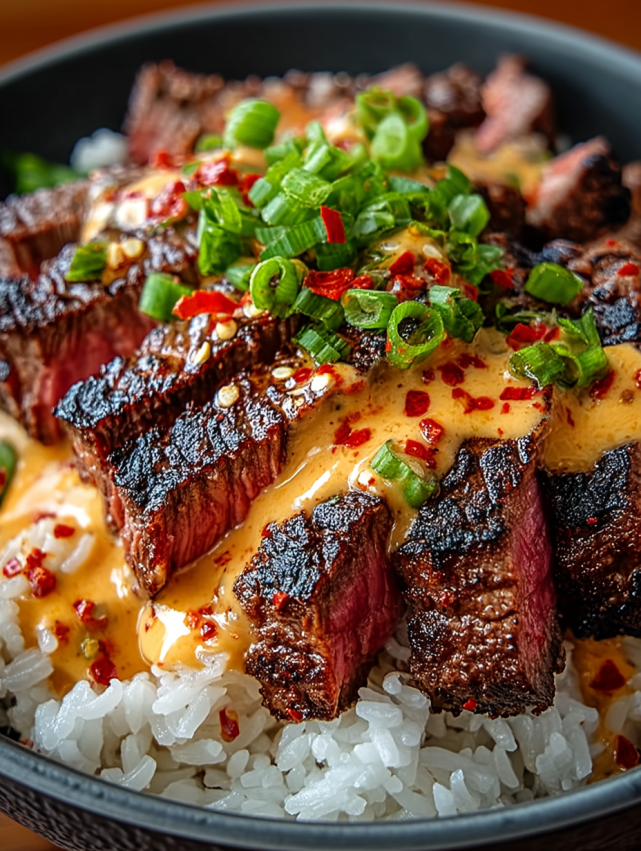
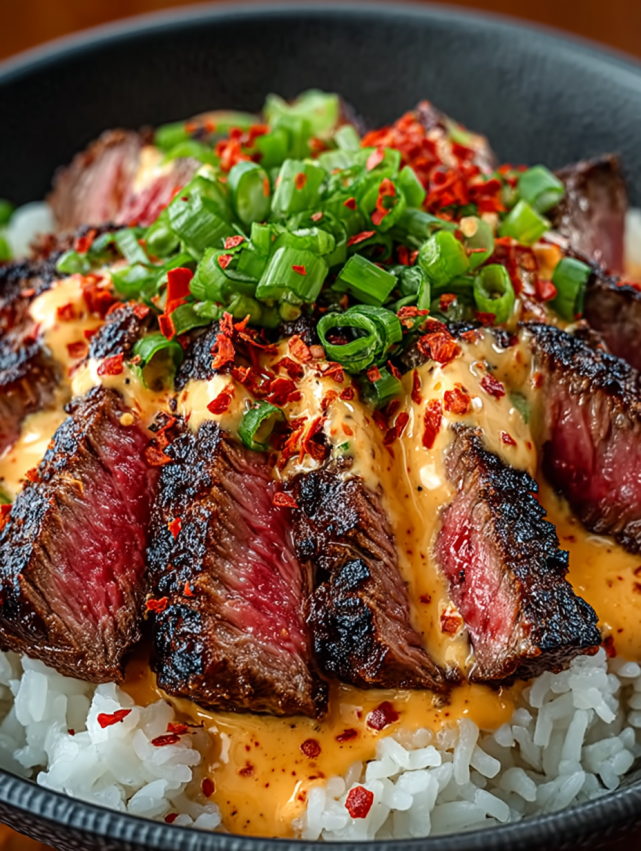
Now comes the fun part. Add a generous scoop of warm rice to each bowl, creating a bed for your toppings. Arrange the cooked steak cubes on top of the rice, allowing the juices to soak in slightly. Drizzle the spicy cream sauce generously over everything—don’t be stingy here, as this sauce really makes the dish sing.
If you’re using any optional toppings, add them now. A handful of sautéed spinach adds nutrients, while pickled cucumbers provide a refreshing crunch that cuts through the richness.
Serving Suggestions
These Korean BBQ bowls are incredibly versatile when it comes to serving. For a traditional approach, serve them with a side of kimchi and a simple cucumber salad dressed with rice vinegar. The fermented tanginess of kimchi complements the sweet-spicy marinade beautifully.
If you’re feeding a crowd, set up a DIY bowl bar where everyone can customize their own creation. Lay out the rice, steak, and sauce along with various toppings like edamame, corn, avocado slices, and nori strips. This interactive approach works wonderfully for casual gatherings and ensures everyone gets exactly what they want.
For a lighter option, swap the rice for cauliflower rice or serve the steak over a bed of mixed greens. The spicy cream sauce doubles as a salad dressing, making this a fantastic low-carb option that doesn’t sacrifice flavor.
Recipe Variations to Try
Chicken BBQ Bowls
Replace the beef with boneless, skinless chicken thighs cut into similar-sized cubes. Chicken thighs stay incredibly moist with this marinade and cook slightly faster than beef. Adjust your cooking time to 4-5 minutes per side, ensuring the internal temperature reaches 165°F.
Pork Bulgogi Style
Thinly sliced pork shoulder or pork loin works beautifully with this marinade. The higher fat content in pork shoulder means extra flavor and tenderness. Cook the pork slices for just 2-3 minutes per side until they develop golden edges.
Vegetarian and Vegan Options
For a plant-based version, use extra-firm tofu pressed and cubed, or try king oyster mushrooms sliced lengthwise. Both absorb the marinade wonderfully. When cooking tofu, give it an extra minute per side to develop a crispy exterior. For a vegan sauce, substitute the mayo and sour cream with cashew cream or vegan mayo alternatives.
Spice Level Adjustments
If you’re serving kids or prefer milder flavors, reduce the gochujang to 1½ teaspoons and use only ½ tablespoon of sriracha in the sauce. On the other hand, heat lovers can double the gochujang and add a teaspoon of gochugaru (Korean red pepper flakes) to the marinade for extra kick.
Make-Ahead Tips
Marinating in Advance
The steak can marinate for up to 24 hours in the refrigerator, though I find the sweet spot to be around 4-6 hours. Beyond 24 hours, the texture can become slightly mushy due to the enzymatic action of the soy sauce and gochujang. If you’re planning that far ahead, consider marinating for just 2 hours before cooking.
Meal Prep Strategy
For weekly meal prep, cook the steak and rice on Sunday evening. Store them in separate airtight containers in the refrigerator for up to 4 days. Keep the spicy cream sauce in a small container with a tight-fitting lid—it stays fresh for up to a week.
When you’re ready to eat, reheat the rice in the microwave for 1-2 minutes, then add the cold steak on top and microwave for another 30-45 seconds. Alternatively, you can enjoy the steak cold over warm rice, which is surprisingly delicious on hot days. Drizzle the sauce over just before eating to maintain its creamy texture.
Freezing Guidelines
The cooked, unsauced steak freezes beautifully for up to 3 months. Let it cool completely, then portion it into freezer bags, removing as much air as possible. Thaw overnight in the refrigerator before reheating. However, I don’t recommend freezing the cream sauce, as it can separate upon thawing.
Important Notes
Meat selection matters. While you can use any cut of beef, flank steak and skirt steak offer the best balance of flavor, tenderness, and value. New York strip is more expensive but incredibly tender if you want to splurge. Avoid leaner cuts like sirloin, which can become tough with high-heat cooking.
Don’t skip the resting period. Those few minutes of resting after cooking aren’t optional—they make the difference between juicy, tender steak and dry, tough meat. Use this time to finish your sauce or prepare your toppings.
Vegetable additions are encouraged. While the recipe is perfect as written, adding vegetables boosts the nutritional value significantly. Sautéed spinach wilts down quickly and adds iron and vitamins. Pickled cucumbers provide probiotics and a refreshing contrast to the rich sauce.
Adjust the sauce consistency. Depending on your mayo brand, the sauce thickness can vary. Start with the recipe as written, then thin it with water or thicken it with extra mayo as needed. The sauce should drizzle easily but not be runny.
Gochujang substitution. If you can’t find gochujang, you can substitute with 1 tablespoon of sriracha mixed with 1 teaspoon of miso paste and ½ teaspoon of sugar. It won’t be identical, but it provides similar heat and fermented depth.
Frequently Asked Questions
Can I use a different type of rice?
Absolutely! While jasmine rice is my personal favorite for its subtle floral notes, white rice, brown rice, or even sushi rice work wonderfully. Brown rice adds a nuttier flavor and more fiber, though it takes longer to cook. For a low-carb option, cauliflower rice or quinoa make excellent substitutes that still soak up that delicious sauce.
How spicy is this recipe?
The heat level is moderate—think pleasantly spicy rather than blow-your-head-off hot. The gochujang provides a gentle warmth that builds gradually, while the honey and cream sauce help balance the heat. If you’re sensitive to spice, start with half the gochujang and sriracha, then gradually increase to your preference. You can always add more heat, but you can’t take it away.
What if I can’t find gochujang at my grocery store?
Most major supermarkets now carry gochujang in the international aisle, but if yours doesn’t, check Asian grocery stores or order it online. In a pinch, you can make a substitute by mixing sriracha with miso paste and a touch of sugar, though the flavor won’t be quite the same. Gochujang has a unique fermented depth that’s hard to replicate perfectly.
Can I make this recipe gluten-free?
Yes! Simply swap the regular soy sauce for tamari or coconut aminos, both of which are gluten-free. Check your gochujang label carefully, as some brands contain wheat. Look for brands specifically labeled gluten-free, or substitute with a gluten-free Korean chili paste.
How do I know when the steak is done?
For medium-rare, aim for an internal temperature of 130-135°F; for medium, 135-145°F; and for well-done, 150°F and above. Using an instant-read thermometer takes the guesswork out of cooking steak. Remember that the meat will continue cooking slightly as it rests, so pull it from the heat when it’s about 5 degrees below your target temperature.
Can I grill the steak instead of pan-searing?
Definitely! Grilling adds wonderful smoky notes that complement the Korean flavors beautifully. Thread the marinated steak cubes onto skewers (if using wooden skewers, soak them in water for 30 minutes first) and grill over medium-high heat for 3-4 minutes per side. The natural sugars in the honey will caramelize gorgeously over the flames.
Is this recipe keto-friendly?
The steak and sauce are naturally keto-friendly, but you’ll need to skip the rice and honey to keep it strictly keto. Replace the rice with cauliflower rice, and substitute the honey in the marinade with a keto-friendly sweetener like erythritol or monk fruit. The flavors remain fantastic with these simple swaps.
How long does the spicy cream sauce last?
The sauce keeps beautifully in an airtight container in the refrigerator for up to one week. In fact, I often make a double batch because it’s fantastic on so many things—burgers, roasted vegetables, tacos, or as a dip for sweet potato fries. Just give it a good stir before using, as the ingredients may separate slightly during storage.