
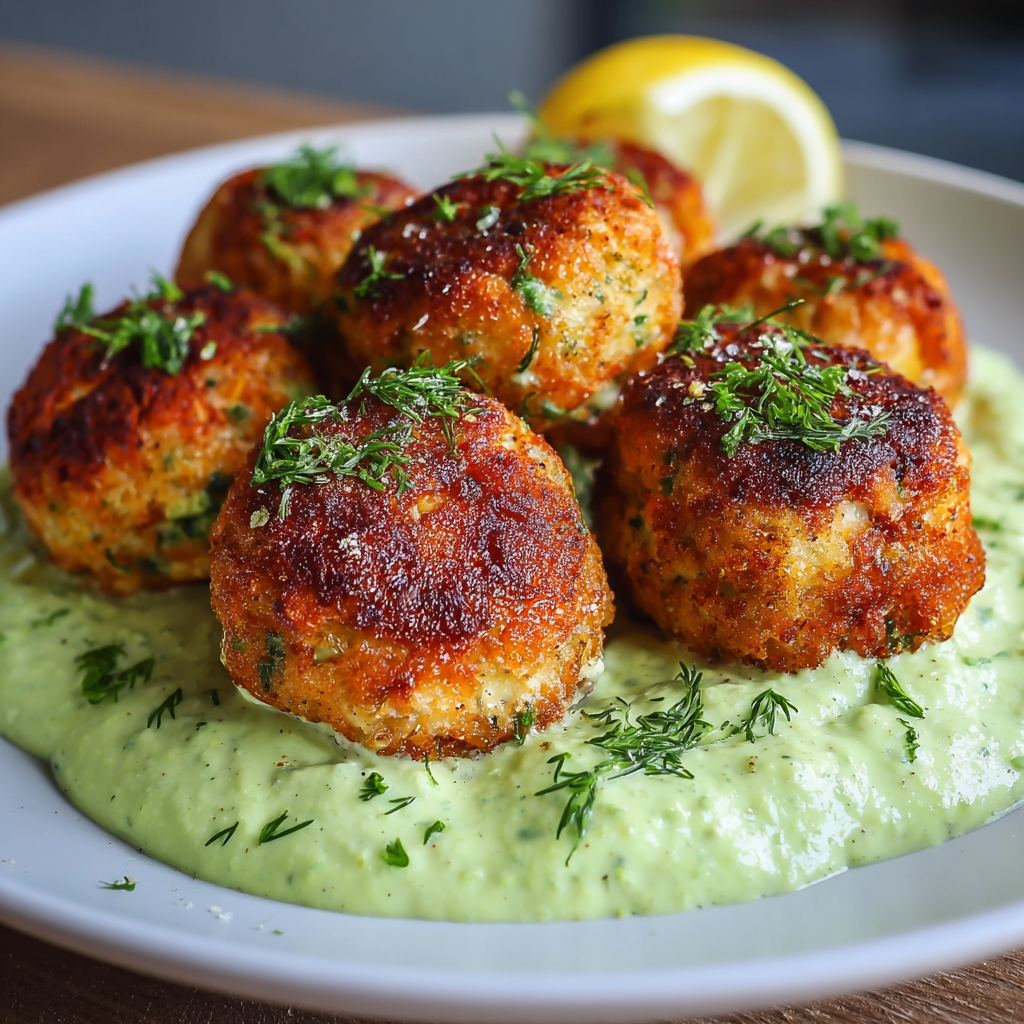
The first time I made these salmon balls, I was desperately searching for a way to get my kids excited about eating fish. Traditional salmon fillets weren’t cutting it, so I decided to transform them into something fun and bite-sized. What emerged from my oven that evening wasn’t just another dinner—it was a game-changer. Golden, crispy on the outside and tender within, these little spheres of goodness paired with a lusciously creamy avocado sauce became an instant family favorite.
Now, these salmon balls have earned a permanent spot in our weekly rotation. They’re perfect for busy weeknights when you need something nutritious but don’t have hours to spend in the kitchen. Additionally, they work beautifully as party appetizers that always disappear within minutes.
Why You’ll Love This Recipe
There’s something magical about a recipe that manages to be both nutritious and incredibly delicious. These salmon balls check every box you could want in a healthy meal.
They’re packed with omega-3s and protein. Fresh salmon delivers heart-healthy fats while keeping you satisfied for hours. Meanwhile, the Greek yogurt in the sauce adds an extra protein boost without feeling heavy.
The preparation couldn’t be simpler. Unlike complicated seafood dishes that require precise timing and techniques, this recipe forgives minor mistakes. Everything comes together in one bowl, then bakes hands-free while you prepare the sauce.
Kids actually request them. Perhaps the best endorsement comes from my picky eight-year-old, who now asks for “those salmon nuggets” at least twice a week. The mild flavor combined with the fun, poppable shape makes them less intimidating than a full fish fillet.
Budget-Friendly and Versatile
You don’t need to splurge on expensive ingredients to make restaurant-quality food. A pound of salmon goes surprisingly far when transformed into balls, feeding a family of four with leftovers to spare. Furthermore, the recipe adapts easily to whatever fresh herbs you have on hand.
Ingredients You’ll Need
Let me walk you through what makes these salmon balls so special. The ingredient list is refreshingly short, yet each component plays a crucial role.
For the Salmon Balls
- 1 lb fresh skinless salmon fillets – Look for bright, firm flesh without any fishy smell
- 1 cup plain breadcrumbs – Regular or panko both work beautifully
- 1 large egg – Acts as the binding agent that holds everything together
- 2 tbsp fresh dill or parsley, chopped – Dill pairs classically with salmon, though parsley offers a milder option
- 2 tbsp lemon juice – Brightens the flavors and cuts through the richness
- ½ tsp garlic powder – Adds depth without overwhelming the delicate fish
- Salt and pepper to taste – Essential for bringing all the flavors forward
For the Creamy Avocado Sauce
- 1 ripe avocado – Should yield slightly when gently pressed
- ½ cup plain Greek yogurt – Creates a tangy, protein-rich base
- Additional lemon juice – About 1 tablespoon for the sauce
- Salt and pepper – Seasoning to your preference
Optional Serving Suggestions
Consider serving these with a crisp green salad, roasted vegetables, or over a bed of quinoa. They also shine as appetizers with toothpicks for easy grabbing at parties.
Step-by-Step Instructions
Creating these salmon balls is a straightforward process that yields impressive results. Let’s break it down into manageable steps.
Preparing Your Workspace
Start by preheating your oven to 375°F (190°C). This temperature ensures the balls cook through completely while developing a beautiful golden exterior. Line a baking sheet with parchment paper to prevent sticking and make cleanup effortless.
Making the Salmon Mixture
Place your salmon fillets on a cutting board and use a fork to flake them into small, bite-sized pieces. Transfer these flakes to a large mixing bowl. The pieces don’t need to be perfectly uniform—some texture adds character to the final product.
Next, add your breadcrumbs, egg, chopped herbs, lemon juice, garlic powder, salt, and pepper to the bowl. Using clean hands or a sturdy spoon, mix everything until just combined. Avoid overworking the mixture, as this can make your salmon balls tough instead of tender.
Shaping and Baking
Scoop about a tablespoon of the mixture and roll it between your palms to form balls roughly one inch in diameter. Place each ball on your prepared baking sheet, spacing them about an inch apart. This allows heat to circulate evenly, ensuring consistent cooking.
Slide the baking sheet into your preheated oven and bake for 20-25 minutes. You’ll know they’re ready when they turn golden brown and feel firm to the touch. A peek inside should reveal fully cooked salmon with no translucent areas remaining.
Creating the Avocado Sauce
While your salmon balls bake, prepare the creamy accompaniment. Cut your avocado in half, remove the pit, and scoop the flesh into a blender or food processor. Add the Greek yogurt, lemon juice, salt, and pepper.
Blend until completely smooth and creamy. The sauce should pour easily but still have enough body to cling to the salmon balls. If it seems too thick, add a splash of water or extra lemon juice. Conversely, if it’s too thin, add a bit more yogurt.
Bringing It All Together
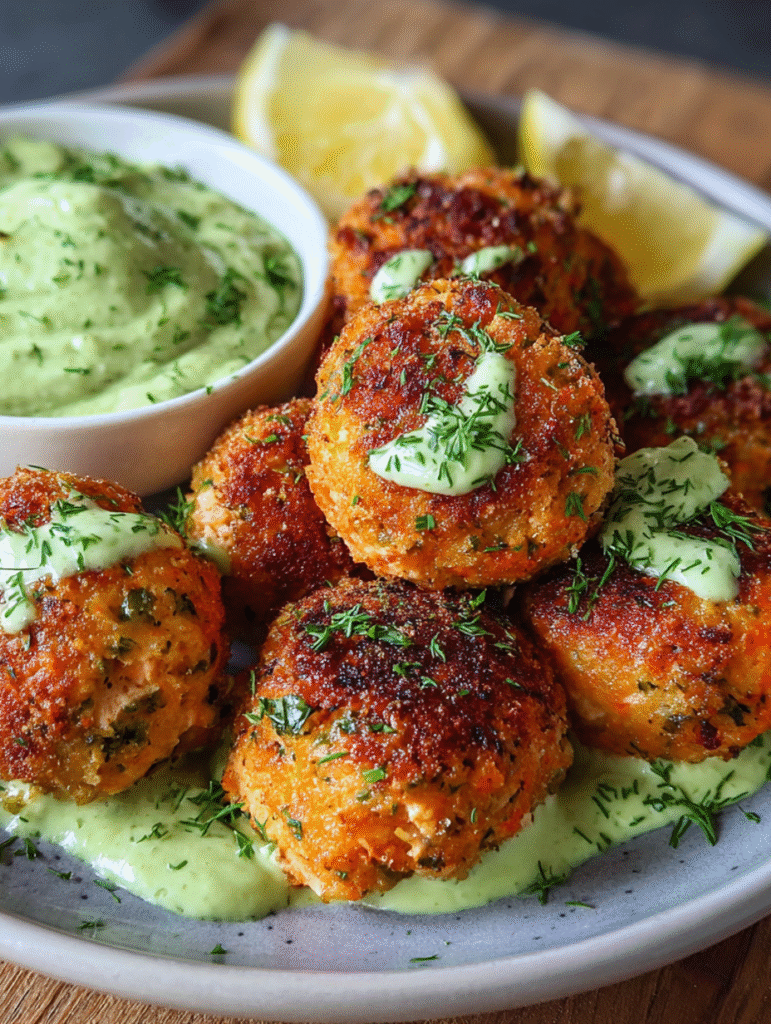
Remove the salmon balls from the oven and let them rest for a minute or two. Transfer them to a serving platter and place your bowl of avocado sauce alongside. Garnish with extra fresh herbs if you’re feeling fancy.
Serving Suggestions
These versatile salmon balls adapt to nearly any meal situation. Their flexibility makes them perfect whether you’re planning a casual family dinner or entertaining guests.
As a Main Course
Serve four to five salmon balls per person over a bed of mixed greens or alongside roasted sweet potatoes. The combination of protein, healthy fats, and vegetables creates a balanced, satisfying meal. Brown rice or cauliflower rice also makes an excellent base that soaks up the creamy avocado sauce.
As an Appetizer
Thread each salmon ball onto a toothpick for easy serving at parties or gatherings. Arrange them on a platter with the avocado sauce in the center for dipping. Your guests will appreciate having something substantial that isn’t just chips and dip.
In a Wrap or Bowl
Stuff these salmon balls into a whole wheat pita with shredded lettuce, tomatoes, and cucumber. Alternatively, create a nourishing grain bowl with quinoa, roasted vegetables, and a generous drizzle of the avocado sauce. Both options work wonderfully for meal prep.
Recipe Variations to Try
Once you’ve mastered the basic recipe, experimenting with different flavor profiles keeps things exciting. Here are some of my favorite twists.
Asian-Inspired Version
Replace the dill with fresh cilantro and add a teaspoon of grated fresh ginger to the salmon mixture. Instead of the avocado sauce, whip up a quick sriracha mayo by mixing Greek yogurt with sriracha and a splash of soy sauce. This variation pairs beautifully with jasmine rice and stir-fried vegetables.
Mediterranean Twist
Incorporate a tablespoon of capers and some finely chopped sun-dried tomatoes into your salmon mixture. Swap the dill for fresh basil. For the sauce, blend the avocado with a tablespoon of tahini and a squeeze of lemon for a Middle Eastern flair. Serve with cucumber salad and warm pita bread.
Spicy Kick
Mix in a diced jalapeño or a teaspoon of red pepper flakes to the salmon mixture. Add a pinch of cayenne pepper to the avocado sauce for an extra layer of heat. This version appeals to those who like their food with some attitude.
Gluten-Free Option
Simply substitute the regular breadcrumbs with gluten-free breadcrumbs or crushed gluten-free crackers. Almond meal also works surprisingly well, adding a subtle nutty flavor and extra protein.
Make-Ahead Tips
Preparing components in advance transforms this recipe into an even more practical weeknight option. Strategic planning means dinner can be on the table in minutes.
Preparing the Salmon Balls
Form the salmon balls up to 24 hours before you plan to bake them. Arrange them on a parchment-lined baking sheet and cover tightly with plastic wrap. Refrigerate until you’re ready to cook. This advance prep doesn’t affect the texture or flavor at all.
For longer storage, freeze the uncooked balls on a baking sheet until solid, then transfer them to a freezer-safe bag. They’ll keep for up to three months. When ready to use, bake directly from frozen, adding an extra five to seven minutes to the cooking time.
Sauce Storage
The avocado sauce maintains its vibrant color and fresh taste for about 24 hours when stored in an airtight container. Press plastic wrap directly onto the surface to minimize browning. Give it a good stir before serving to restore its creamy consistency.
Cooked Ball Storage
Leftover baked salmon balls keep well in the refrigerator for up to three days. Reheat them in a 350°F oven for about ten minutes to restore their exterior crispness. Microwaving works in a pinch but may result in a softer texture.
Notes
A few key insights will help you achieve perfect results every time you make this recipe.
Fresh salmon makes all the difference. While you might be tempted to use canned salmon, fresh fillets create a superior texture and flavor. The extra cost is worth it for special occasions, though canned salmon works in a pinch for casual weeknight dinners.
Don’t skip the parchment paper. Even on non-stick baking sheets, these salmon balls can stick stubbornly. Parchment paper guarantees easy removal and makes cleanup virtually effortless.
Temperature matters for the avocado. Using a perfectly ripe avocado ensures your sauce comes together smoothly without any lumps. If your avocado is slightly underripe, let the sauce sit for a few minutes after blending—the lemon juice will help break down any remaining chunks.
Moisture control is crucial. If your salmon mixture seems too wet and won’t hold its shape, add a tablespoon or two more breadcrumbs. Conversely, if it’s too dry and crumbly, a small splash of milk or water will help bind everything together.
Frequently Asked Questions
Can I use frozen salmon instead of fresh?
Absolutely! Just make sure to thaw it completely and pat it very dry with paper towels before flaking. Frozen salmon tends to release more moisture, so you might need to add a few extra breadcrumbs to achieve the right consistency. The flavor won’t be quite as bright as fresh, but it’s still delicious and much more budget-friendly.
Why are my salmon balls falling apart?
This usually happens when the mixture is either too wet or hasn’t been mixed thoroughly enough. Make sure you’ve incorporated the egg completely—it’s your primary binder. If problems persist, try chilling the mixture for 15 minutes before forming the balls. The cold helps everything stick together better.
Can I make these without breadcrumbs?
Yes, though the texture will be slightly different. Crushed crackers, panko, or even rolled oats work as substitutes. For a lower-carb version, try finely ground almonds or a combination of almond flour and grated parmesan cheese. These alternatives create a denser ball but still taste fantastic.
How do I know when they’re fully cooked?
The exterior should be golden brown and feel firm when gently pressed. If you’re uncertain, cut one open to check—the inside should be opaque throughout with no translucent or raw-looking areas. An instant-read thermometer inserted into the center should read 145°F.
What can I substitute for Greek yogurt in the sauce?
Sour cream works beautifully if you don’t have Greek yogurt on hand. For a dairy-free version, try using coconut cream or cashew cream. Both create that luxurious, creamy texture while keeping the sauce plant-based. Just adjust the seasonings slightly, as these alternatives are less tangy than yogurt.
Can I air fry these instead of baking?
Definitely! Preheat your air fryer to 375°F and cook the salmon balls for 12-15 minutes, shaking the basket halfway through. They’ll develop an even crispier exterior than oven-baked versions. Just make sure not to overcrowd the basket—cook in batches if necessary.
How can I make these more kid-friendly?
Reduce or eliminate the lemon juice if your kids find it too tangy. Using parsley instead of dill creates a milder flavor profile. You can also make the balls slightly smaller so they’re easier for little hands to manage. Serving them with ketchup or ranch dressing alongside the avocado sauce gives kids familiar options.
Nutrition (per serving):
- Calories: 120
- Sugar: 0g
- Sodium: 200mg
- Fat: 6g
- Saturated Fat: 1g
- Unsaturated Fat: 4g
- Trans Fat: 0g
- Carbohydrates: 8g
- Fiber: 1g
- Protein: 10g
- Cholesterol: 45mg