
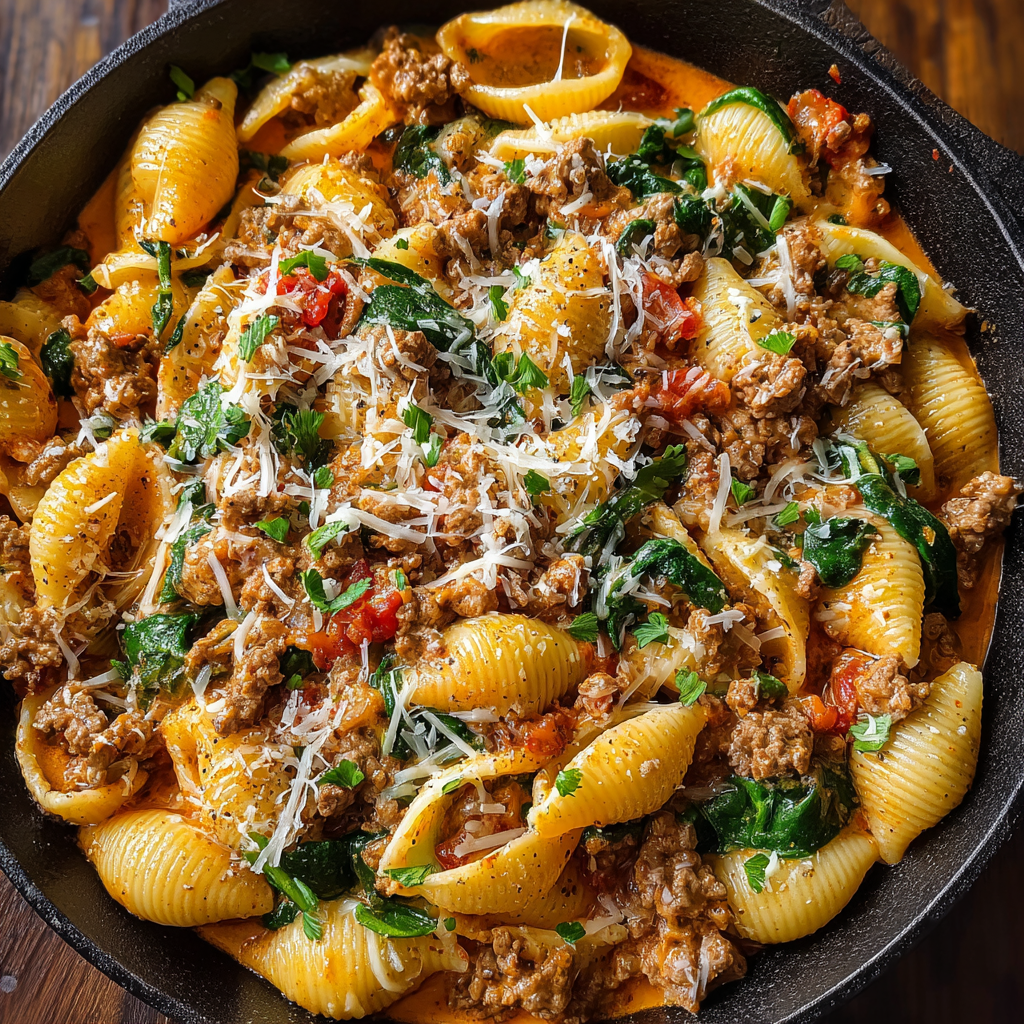
There’s something incredibly satisfying about a dish that brings together pasta, seasoned ground beef, and a luscious creamy sauce—all cooked in a single skillet. This Creamy Beef and Shells recipe has become my go-to weeknight dinner when I need something hearty, delicious, and stress-free. The first time I made it, I was amazed at how the pasta cooked right in the skillet with the beef, soaking up all those savory flavors. My family devoured it in minutes, and it’s been on regular rotation ever since.
What makes this recipe particularly special is its simplicity. Instead of boiling pasta separately and dirtying multiple pots, everything comes together in one pan. The Greek yogurt adds a tangy creaminess that’s lighter than heavy cream but just as satisfying, while the melted cheddar brings that comforting, familiar taste we all crave.
Why You’ll Love This Creamy Beef and Shells Recipe
It’s genuinely a one-pot wonder. From browning the beef to cooking the pasta and creating that creamy sauce, everything happens in the same skillet. Cleanup is minimal, which means more time relaxing after dinner instead of scrubbing dishes.
The flavors are incredibly well-balanced. Ground beef provides a savory foundation, while Italian seasoning, smoked paprika, and garlic powder add depth without overwhelming the dish. Meanwhile, the tangy Greek yogurt balances the richness of the cheese perfectly.
You can have dinner on the table in under 30 minutes. This recipe doesn’t require any complicated techniques or hard-to-find ingredients. Once you start cooking, you’re just about half an hour away from a satisfying, homemade meal.
It’s packed with hidden nutrition. The fresh spinach wilts right into the pasta, adding vitamins and minerals without changing the flavor profile. Even picky eaters won’t mind the greens when they’re mixed into this creamy, cheesy goodness.
Leftovers taste amazing. Unlike some pasta dishes that dry out when reheated, this one maintains its creamy texture. Just add a splash of broth when warming it up, and it’s as good as fresh.
Ingredients You’ll Need
Main Components
- 1 lb ground beef or ground turkey – Choose whichever protein you prefer; both work beautifully
- 8 oz shell pasta – Medium shells are ideal for catching that creamy sauce
- 4.2 oz onion, finely diced – Adds aromatic sweetness to the base
- 10.5 oz fresh spinach, roughly chopped – Wilts down significantly, so don’t worry about the volume
- 2 cups broth – Beef broth offers the richest flavor, though chicken or vegetable broth work too
- 3.9 tbsp tomato paste – Provides umami depth and a subtle tomato flavor
- 1 tsp Worcestershire sauce – Enhances the savory, meaty notes
- 12.7 oz plain Greek yogurt, room temperature – The secret to a tangy, creamy sauce without heavy cream
- 2.1 oz grated cheddar cheese – Melts beautifully and adds classic comfort
- 2 tsp Italian seasoning, divided – A blend of herbs that complements the dish perfectly
- 1/2 tsp garlic powder – Convenient and distributes evenly throughout
- 1/2 tsp smoked paprika – Adds a subtle smoky dimension
- Salt and black pepper, to taste – Essential for bringing out all the flavors
For Serving
- Extra grated cheese for topping
- Fresh parsley or basil, chopped
- Crusty bread for soaking up the sauce
- A simple side salad for added freshness
How to Make Creamy Beef and Shells
Step 1: Brown the Ground Beef
Heat a large cast iron skillet over medium heat. Once the pan is hot, add your ground beef and break it apart with a wooden spoon or spatula. Cook for 4 to 5 minutes, stirring occasionally, until the meat is fully browned and no pink remains visible. The key here is to let the beef develop some color for maximum flavor.
Step 2: Season and Add Aromatics
Drain any excess fat from the skillet, leaving just enough to keep things from sticking. Stir in the Worcestershire sauce, finely diced onion, half of the Italian seasoning, smoked paprika, garlic powder, salt, and black pepper. Continue cooking for another 2 to 3 minutes until the onions become fragrant and start to soften. This step builds the flavor foundation for your entire dish.
Step 3: Add Pasta and Liquid
Pour in the tomato paste, shell pasta, broth, and the remaining Italian seasoning. Mix everything thoroughly, ensuring the pasta is mostly submerged in the liquid. If it looks a bit dry or the pasta isn’t covered, add a splash of extra broth or water. This is important because the pasta needs enough liquid to cook properly.
Step 4: Simmer Until Tender
Reduce the heat to low and cover your skillet with a tight-fitting lid. Allow everything to cook for 10 to 15 minutes, stirring every 4 to 5 minutes. These regular stirs prevent the pasta from sticking to the bottom and ensure even cooking throughout. If the mixture starts looking dry before the pasta is tender, don’t hesitate to add more liquid in small increments.
Step 5: Add Cheese and Spinach
Remove the lid once your pasta reaches al dente texture and most of the liquid has been absorbed. Stir in the grated cheddar cheese and roughly chopped spinach. Keep stirring gently until the cheese melts completely and the spinach wilts down. This usually takes just a minute or two.
Step 6: Finish with Greek Yogurt
Take the skillet off the heat and let it cool for 5 to 10 minutes. This cooling period is crucial—it prevents the Greek yogurt from curdling when you stir it in. Once slightly cooled, incorporate the room-temperature Greek yogurt until the sauce becomes smooth and creamy. Serve immediately while everything is perfectly warm and luscious.
Serving Suggestions
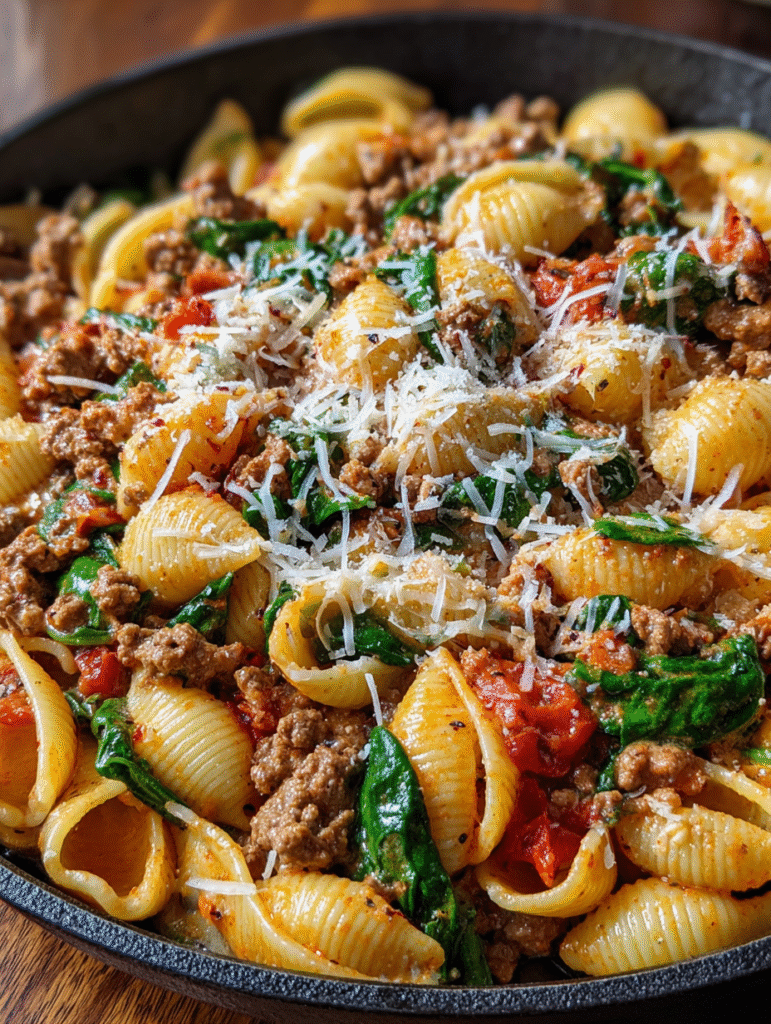
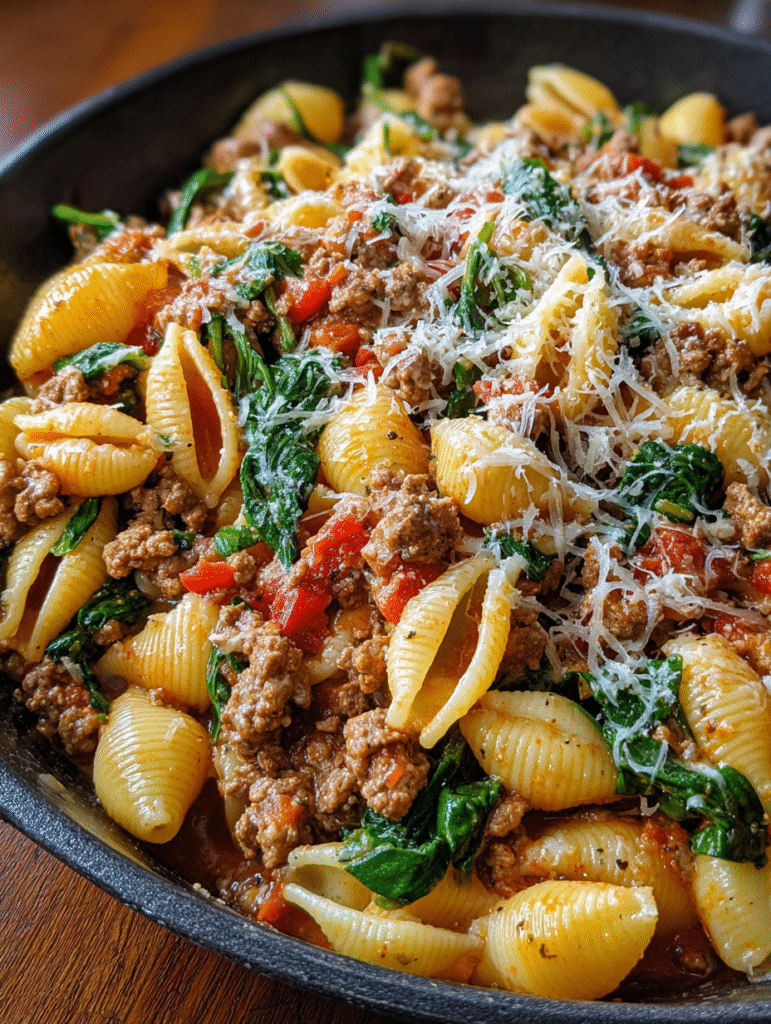
This Creamy Beef and Shells is delicious straight from the skillet, but a few additions can make it even better. Sprinkle some extra cheddar cheese on top for those who love an extra cheesy bite. Fresh herbs like parsley or basil add a pop of color and freshness that brightens the rich flavors.
Serve alongside some crusty garlic bread for soaking up every bit of that creamy sauce. A simple green salad with a light vinaigrette provides a refreshing contrast to the hearty pasta. For a heartier meal, roasted vegetables like broccoli or green beans make excellent companions.
Recipe Variations to Try
Spicy Version
Add 1/2 teaspoon of red pepper flakes when you season the beef, or stir in some diced jalapeños with the onions. A few dashes of hot sauce in the finished dish also works beautifully if you want adjustable heat.
Extra Veggie-Packed
Beyond spinach, consider adding diced bell peppers, mushrooms, or zucchini when you cook the onions. These vegetables add nutrition, color, and different textures without significantly changing the cooking time.
Italian Sausage Twist
Replace the ground beef with Italian sausage (mild or spicy, depending on your preference). The fennel and herbs in the sausage add another dimension of flavor that pairs wonderfully with the creamy sauce.
Lighter Version
Use ground turkey or chicken instead of beef for a leaner option. Replace the cheddar with reduced-fat cheese, and you’ll still have a satisfying dish with fewer calories.
Different Pasta Shapes
While shells work perfectly for catching the sauce, other shapes like rotini, penne, or cavatappi are excellent substitutes. Just keep the cooking time roughly the same and adjust liquid as needed.
Make-Ahead Tips
This dish is best enjoyed fresh, but you can definitely prep components ahead of time. Dice your onions and chop your spinach up to two days in advance, storing them in airtight containers in the refrigerator. Brown the ground beef the night before and refrigerate it; just remember to bring it back to room temperature before continuing with the recipe.
If you want to prepare the entire dish ahead, cook it completely but hold back on adding the Greek yogurt. Store the pasta and beef mixture in the refrigerator for up to three days. When ready to serve, gently reheat on the stovetop with a splash of broth, then stir in the yogurt once it’s warmed through.
Freezing works reasonably well, though the texture changes slightly. Freeze portions without the Greek yogurt in freezer-safe containers for up to two months. Thaw overnight in the refrigerator, reheat gently, and add fresh Greek yogurt when serving.
Important Notes
Room temperature Greek yogurt is essential. Cold yogurt can curdle when mixed into the hot pasta, creating an unpleasant texture. Take it out of the refrigerator 30 minutes before you start cooking, or microwave it for 10 to 15 seconds to take the chill off.
Don’t skip the cooling period. Allowing the skillet to cool for 5 to 10 minutes before adding yogurt might seem like an unnecessary step, but it prevents curdling and ensures a silky-smooth sauce.
Pasta absorption varies. Different brands and shapes absorb liquid at different rates. Keep an eye on your pasta as it cooks and add more broth or water if things look too dry. You want the pasta to be just covered with liquid throughout the cooking process.
Cast iron retains heat longer. If you’re using a cast iron skillet as recommended, remember it holds heat extremely well. When you remove it from the burner, it continues cooking the contents for several minutes, so timing the yogurt addition correctly is important.
Leftovers may need thinning. The pasta continues absorbing sauce as it sits, so refrigerated leftovers often appear thicker. Simply stir in a few tablespoons of broth or water when reheating to restore the creamy consistency.
Frequently Asked Questions
Can I use sour cream instead of Greek yogurt?
Absolutely! Sour cream works as a direct substitute for Greek yogurt and creates an equally creamy sauce. However, it’s slightly higher in fat and has a different tangy profile. The same rule applies—make sure it’s at room temperature before stirring it in.
Why is my pasta still hard after the cooking time?
This usually means there wasn’t enough liquid in the skillet. Different stove temperatures and pan materials can affect evaporation rates. Next time, start with an extra 1/4 cup of broth, and don’t hesitate to add more liquid during cooking if the pasta looks dry.
Can I make this with whole wheat or gluten-free pasta?
Yes, though cooking times may vary slightly. Whole wheat pasta typically takes a bit longer to cook and may require additional liquid. Gluten-free pasta can be more delicate and might need closer attention to prevent mushiness. Check the package directions for guidance on timing.
What if I don’t have Italian seasoning?
Create your own blend using equal parts dried basil, oregano, and thyme. A pinch of rosemary adds nice depth if you have it. This homemade version works just as well as store-bought Italian seasoning.
Can I double this recipe?
Definitely, but you’ll need a very large skillet or Dutch oven to accommodate everything. Make sure your pan is big enough that the pasta can lie relatively flat and submerged in liquid. You might need to increase the cooking time by a few minutes for the larger volume.
How do I prevent the ground beef from being greasy?
Choose leaner ground beef (90/10 or 93/7) if you prefer less fat. After browning, drain the excess grease thoroughly. Some people like to press the cooked beef with paper towels to absorb even more fat before adding the seasonings.
Is this recipe kid-friendly?
Very much so! The mild flavors appeal to most children, and the cheese and pasta combination is usually a hit. If your kids are skeptical about spinach, chop it extra fine—it practically disappears into the sauce. You can also reduce or omit the smoked paprika if they’re sensitive to smoky flavors.
What’s the best way to reheat leftovers?
Stovetop reheating works best. Place the leftovers in a skillet over medium-low heat, add 2 to 3 tablespoons of broth or water, and stir gently until heated through. Microwave reheating is quicker but can make the pasta slightly rubbery—add a splash of liquid and heat in 1-minute intervals, stirring between each.