
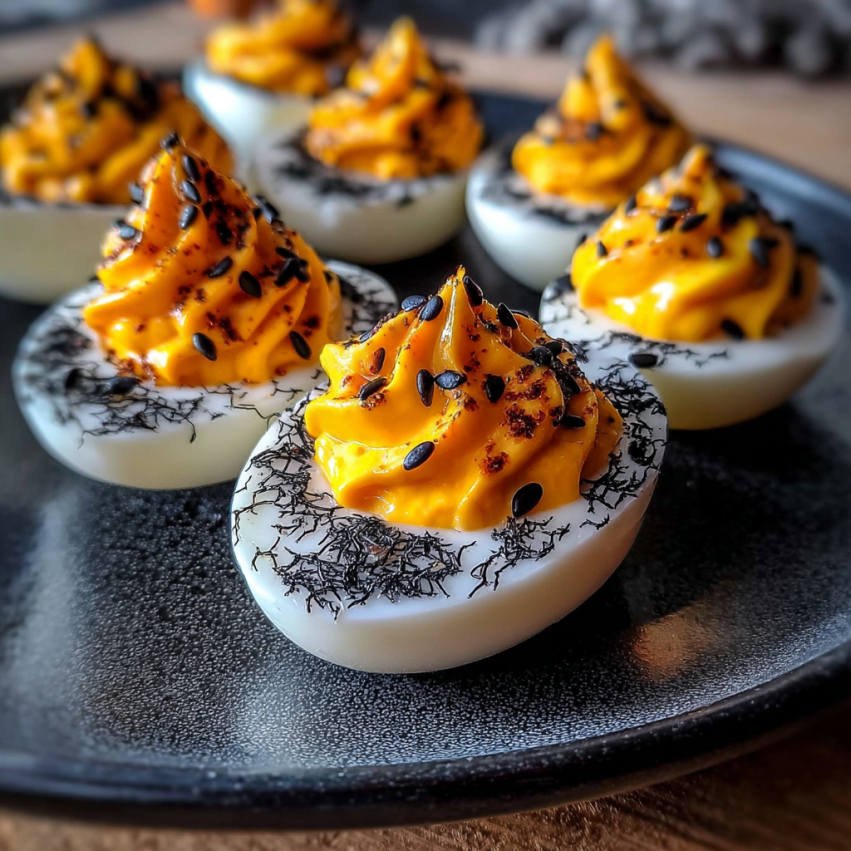
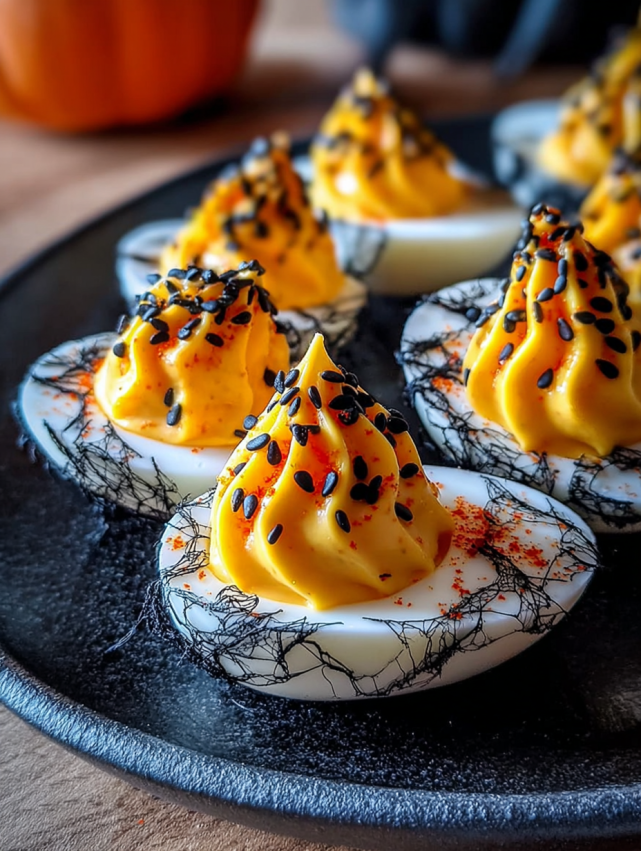
There’s something magical about turning a classic deviled egg into a Halloween masterpiece. I remember the first time I stumbled upon this technique at a friend’s costume party—the intricate black web patterns looked almost too beautiful to eat. Since then, these spooky spiderweb eggs have become my go-to appetizer for every October gathering, and honestly, they never fail to get gasps of delight from guests.
The best part? While they look incredibly intricate and time-consuming, the secret is surprisingly simple. A few gentle taps, some food coloring, and a bit of patience transform ordinary hard-boiled eggs into eerie, eye-catching treats that taste just as good as they look.
Why You’ll Love This Recipe
Visually Stunning with Minimal Effort
These eggs create a dramatic wow-factor that makes people think you spent hours in the kitchen. In reality, most of the work happens while you’re sleeping or going about your day—the coloring solution does all the heavy lifting.
Perfectly Balanced Flavors
The creamy, tangy filling combines classic deviled egg ingredients with just the right amount of Dijon kick. Meanwhile, the egg whites themselves taste exactly as they should, since the food coloring is completely flavorless.
Customizable for Any Skill Level
Whether you’re a kitchen novice or an experienced home cook, this recipe adapts to your comfort level. You can keep the filling traditional or experiment with bold flavors and colors to match your Halloween theme.
Make-Ahead Friendly
Busy party planners will appreciate that these can be prepped a day in advance. The spiderweb effect actually gets better with longer soaking time, so procrastination becomes your secret weapon.
Everything You’ll Need
For the Spiderweb Eggs
- 6 large eggs, hard-boiled and cooled
- 1 to 2 cups water (enough to cover eggs completely)
- 1 teaspoon black food coloring gel
- 1 tablespoon white vinegar
For the Creamy Filling
- 3 tablespoons mayonnaise
- 1 teaspoon Dijon mustard
- 1 teaspoon apple cider vinegar
- Pinch of kosher salt
- Pinch of freshly ground black pepper
Optional Garnish Ideas
- Smoked paprika for a subtle smokiness
- Black sesame seeds for extra spookiness
- Finely chopped chives for a pop of color
- Purple or green food coloring gel for extra eerie filling
Steps to Cook
Creating the Spiderweb Pattern
Start by gently tapping your cooled, hard-boiled eggs all over with the back of a spoon. The goal here is to create a network of fine cracks without actually peeling the shell away. Think of it like creating a mosaic—the more cracks you add, the more intricate your web pattern will be. However, avoid pressing too hard or you’ll break through the membrane underneath.
Next, prepare your coloring solution in a sealable container or deep bowl. Mix the water with black food coloring gel, stirring thoroughly until the mixture turns uniformly dark. The gel form works much better than liquid food coloring because it creates more concentrated, vibrant results.
Carefully submerge your cracked eggs into the solution, making sure they’re completely covered. If some eggs float to the surface, add a bit more water or place a small plate on top to keep them submerged. This step is crucial for even coloring.
The Waiting Game
Cover your container and transfer it to the refrigerator. For a subtle spiderweb effect, three hours will do the trick. On the other hand, if you want dramatic, bold lines that really pop, let them soak overnight. Personally, I always go for the overnight method—the results are just more impressive.
Revealing the Magic
Once your eggs have finished soaking, remove them from the solution and rinse under cool water. Add a splash of white vinegar during rinsing to help set the color and prevent it from bleeding later. Then comes the most satisfying part—carefully peel away the shells to reveal the intricate spiderweb pattern underneath. Take your time with this step to preserve those beautiful lines.
Making the Filling
Slice your peeled eggs in half lengthwise, working carefully to maintain the pattern. Gently scoop out the yolks and place them in a mixing bowl. Using a fork, mash the yolks until they’re finely crumbled with no large chunks remaining.
Add the mayonnaise, Dijon mustard, apple cider vinegar, kosher salt, and black pepper to the bowl. Mix everything together until you achieve a smooth, creamy consistency. For an extra spooky twist, blend in a drop of green or purple food coloring gel at this stage.
Assembly and Garnish
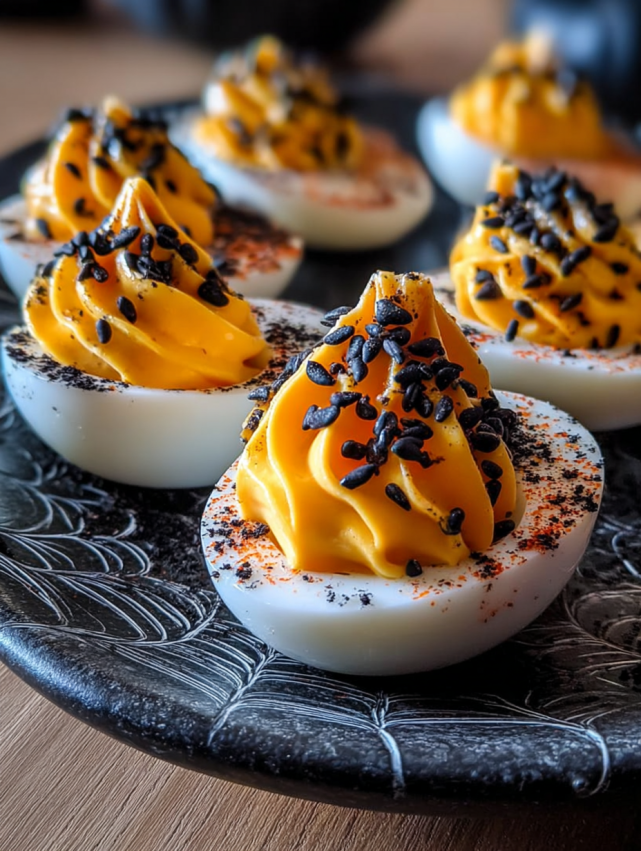
Spoon the yolk mixture back into the egg white cavities, mounding it slightly for a classic deviled egg look. Alternatively, use a piping bag with a star tip for a more elegant presentation. Finally, sprinkle your chosen garnish over the top—smoked paprika adds warmth, black sesame seeds amplify the spooky factor, and chives provide a fresh contrast.
Arrange your finished spiderweb eggs on a serving platter and keep them chilled until you’re ready to serve.
Serving Suggestions
These spooky spiderweb eggs shine as a Halloween party appetizer, but they’re versatile enough for other occasions too. Serve them on a black slate board surrounded by dry ice for a truly theatrical presentation (just make sure guests don’t touch the dry ice directly). Alternatively, nestle them in a bed of black rice crackers or arrange them on a white platter to make those dark webs really stand out.
For a complete Halloween spread, pair these eggs with other finger foods like mummy hot dogs, witch finger breadsticks, or pumpkin-shaped cheese balls. They also work beautifully as part of a brunch buffet—just tone down the spooky garnishes if you’re serving them outside of October.
Recipe Variations
Flavor Twists for the Filling
The classic deviled egg filling is delicious on its own, but don’t be afraid to experiment. Add a few dashes of hot sauce for a spicy kick that cuts through the creaminess. Mix in a tablespoon of sweet pickle relish for a tangy-sweet contrast. For something completely different, try stirring in half a teaspoon of curry powder and a pinch of turmeric for an Indian-inspired version.
Different Color Schemes
While black creates the most dramatic spiderweb effect, you can experiment with other dark colors. Deep purple makes for a mystical, witchy vibe. Dark green gives off swamp monster energy. Red creates a bloody, vampire-themed look. Just remember that gel food coloring works best—liquid versions won’t be concentrated enough.
Filling Colors
Take the spooky factor up a notch by tinting your filling. A drop of green food coloring creates a “toxic waste” effect. Purple makes them look poisonous and mysterious. You can even divide your filling and make multiple colors for variety.
Make-Ahead Tips
These eggs are actually better when you prep them in advance, which makes them perfect for party planning. You can create the spiderweb pattern and soak the eggs up to 24 hours before your event. Just keep them in the coloring solution in the refrigerator until you’re ready to peel and fill them.
For the filling, prepare it separately and store it in an airtight container for up to 24 hours. This actually allows the flavors to meld together beautifully. When you’re ready to serve, simply peel the eggs, halve them, and fill them. This approach saves you from last-minute stress and ensures everything tastes fresh.
If you need to transport these to a party, keep the whites and filling separate until you arrive. The filled eggs can get a bit messy during travel, so assembling them on-site keeps them picture-perfect.
Notes
Choosing the Right Food Coloring: Gel food coloring is absolutely essential for this recipe. Liquid food coloring is too watery and won’t create intense enough colors. You can find gel food coloring at most craft stores, baking supply shops, or online.
Perfect Hard-Boiled Eggs: For eggs that peel easily, use eggs that are at least a week old. Fresh eggs have a lower pH level, which makes the membrane stick to the shell. After boiling, shock them in an ice bath for at least 10 minutes before cracking.
Adjusting Color Intensity: If your spiderweb pattern isn’t dark enough after the initial soak, you can always crack the eggs again in different places and soak them for another hour or two. This creates a layered, even more complex web effect.
Food Safety: Like all egg dishes, these should be kept refrigerated and consumed within two days. Don’t leave them at room temperature for more than two hours during serving.
Frequently Asked Questions
Can I use liquid food coloring instead of gel?
Technically yes, but the results won’t be nearly as dramatic. Liquid food coloring is much more diluted, so you’d need to use significantly more to achieve the same intensity. Gel food coloring is worth the investment—a single jar lasts through many batches.
Why do my eggs have white spots instead of a full spiderweb?
This usually happens when the eggs weren’t cracked enough initially. The color can only penetrate where there are cracks in the shell. Next time, tap more thoroughly all over the surface, creating a dense network of small cracks rather than a few large ones.
Can I make these with quail eggs for a mini version?
Absolutely! Quail eggs make adorable bite-sized spiderweb eggs. Just reduce the soaking time to about 2 hours since the shells are thinner. You’ll also need to adjust your filling quantities down since you’ll get less yolk from each egg.
How do I prevent the color from staining my hands?
Wear disposable gloves when handling the eggs after they’ve been in the coloring solution. If you do get food coloring on your hands, wash them immediately with soap and warm water, then use a bit of lemon juice or baking soda paste to remove any lingering stains.
Can I freeze these for later?
Unfortunately, no. Hard-boiled eggs don’t freeze well—the whites become rubbery and watery when thawed. These are best enjoyed fresh or within a couple days of making them.
What if my food coloring bleeds after peeling?
This happens when you skip the vinegar rinse. The vinegar acts as a fixative, setting the color into the egg white. If it’s already happened, pat the eggs dry with paper towels and let them sit uncovered in the refrigerator for 30 minutes to dry out the surface.
Can I use these for Easter instead of Halloween?
Definitely! Use pastel colors like pink, blue, or yellow for a springtime spiderweb egg. They look especially pretty for an elegant Easter brunch. The technique works for any occasion—just adjust your color palette to match the theme.